
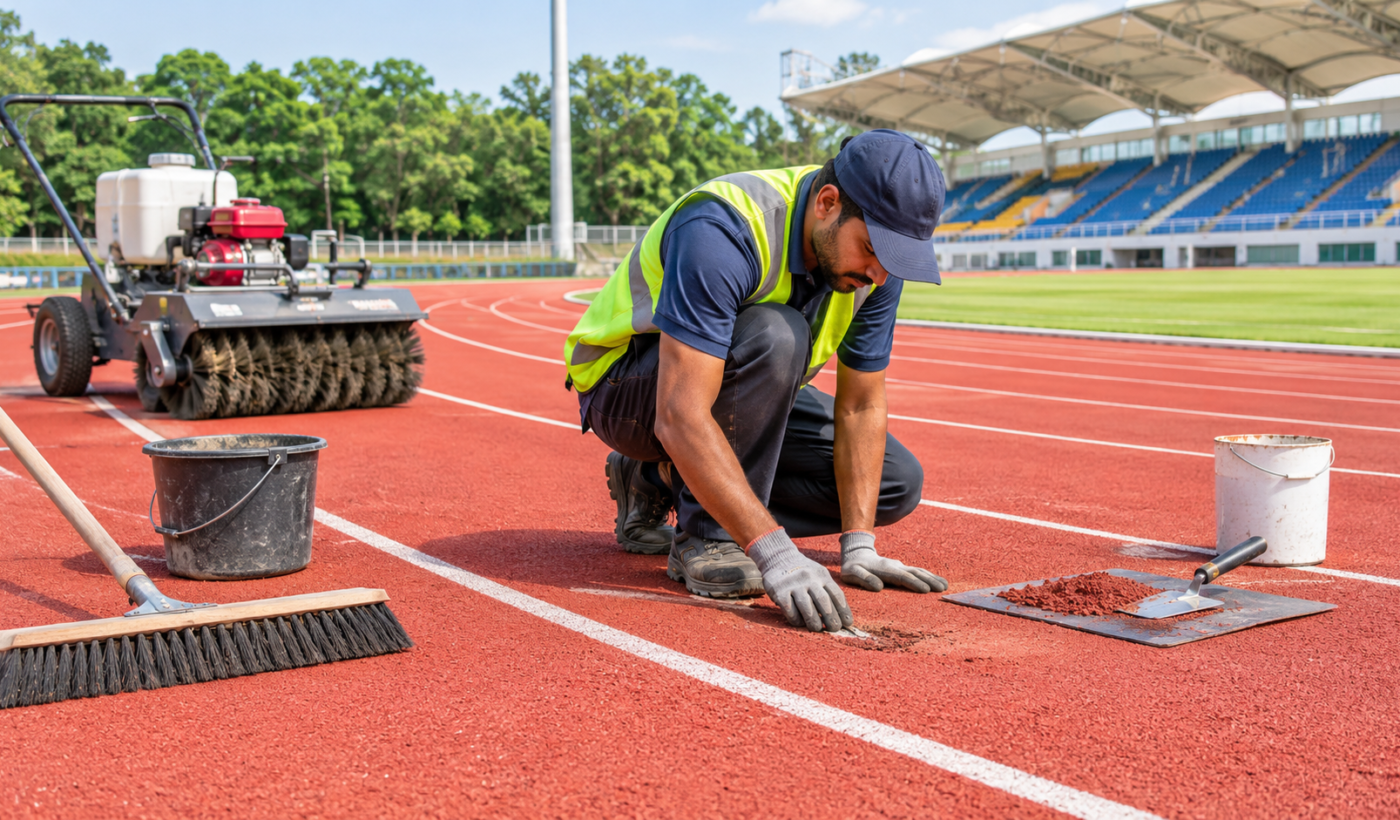
A synthetic running track takes a lot of wear, especially in schools, sports clubs and training centres. Every day, athletes run across the same lanes, while dust, rain and sunlight slowly affect the surface. Over time, even a well-built track can develop cracks, loose patches or poor grip.
That’s why regular maintenance matters. It helps protect the surface, reduce repair costs and keep the track safe for daily use. The good news? Looking after a running track doesn’t have to be complicated.
With proper cleaning, early repairs and timely resurfacing, you can keep your track in good condition for years.
Why Maintenance Matters?
Due to regular usage, natural impact and intensive workouts, a running track experiences many problems that may appear to be very challenging to address. First of all, a large amount of dirt accumulates, drainage channels become blocked and the surface starts wearing off.
Maintenance is an effective way to preserve friction, cushioning and surface properties of a synthetic track. Moreover, maintenance lets you spot minor defects and fix them before they lead to extra costs.
How to Clean a Running Track Surface?
Cleaning is one of the easiest ways to prolong the life of the track. Nevertheless, inappropriate cleaning can do more harm than good to the track.
Follow this simple guide:
- Remove litter and loose dirt.
- Use a soft broom or leaf blower to clean the surface.
- Rinse dirt and mud in case they accumulate.
- Don’t wash the surface with chemicals and at high pressure unless it is allowed.
- Clean all oil stains, paints and other spills in time.
- Maintain drainage channels free of obstacles.
Also, pay attention to any puddles that remain on the surface after rain.
How to Detect Minor Defects in a Running Track?
Small surface problems can be easily overlooked during regular training. That’s why it is recommended to inspect the surface of the track at least once a week.
Pay special attention to turns, starting areas and the most frequently used lanes.
These are common indications of minor defects:
- Cracks, splits and holes
- Loose rubber granules
- Patches with fading and wear
- Elevated edges or raised surface
- Unbalanced surface and reduced friction
In case you notice any of these defects, organise a professional inspection of the surface.
Repairing a Running Track with Small Surface Problems
Minor cracks and patches are not the reason for major repair works. However, such problems require appropriate materials to be applied correctly.
An experienced specialist should evaluate the condition of the surface and determine the nature of the defect. For instance, cracks in the surface require local repair and cracks in the base layer should be treated differently.
Don’t cover cracks with ordinary paints or other materials that may negatively affect the surface.
When Is It Time to Perform Resurfacing
Regardless of regular maintenance, the synthetic running track eventually gets old and needs resurfacing.
Resurfacing becomes a necessity when the surface shows signs of major wear, low friction, repeated cracking or a hard and uneven surface.
Depending on the condition of the track, resurfacing will allow restoring the upper layer only without reconstructing the whole track. If the defect appears in the base layer, reconstruction will be necessary.
Useful Track Maintenance Schedule
Here is the schedule of maintenance that will make this process easy:
- Daily or weekly: Removal of dirt, litter and leaves.
- Weekly: Inspection of the surface.
- Every few months: Evaluation of the track condition.
- As needed: Repair of damaged surfaces.
- Occasionally: Evaluate the need for resurfacing.
Conclusion
Proper maintenance, including cleaning, timely repair and resurfacing in case of necessity, will help you to protect the surface of your synthetic running track. Moreover, the choice of proper materials will also be important for good results.
Atlas PU Systems offers different polyurethane products for athletic tracks and sports flooring.